Solar Pump System Troubleshooting: Common Issues and Solutions for Field Technicians
Introduction
Troubleshooting solar pump systems in the field requires a methodical approach—panicked component replacement wastes time and money. Field technicians equipped with systematic diagnostic procedures can resolve 80% of pump issues within 2 hours, keeping agricultural operations and community water supplies running. KINBO solar pump controllers include built-in diagnostic fault codes that narrow the problem to specific subsystems, reducing average diagnosis time by over 60% compared to trial-and-error approaches.
Table of Contents
Interpreting Controller Fault Codes
| Fault Code | Meaning | First Action |
|---|---|---|
| OC / E01 (Over-Current) | Motor drawing excessive current | Check for sand-locked impeller; measure winding resistance |
| UV / E03 (Under-Voltage) | Panel voltage below threshold | Check panel connections; measure Voc at array terminals |
| DR / E05 (Dry-Run) | No-load current detected | Check well water level; inspect intake screen for clogging |
| OV / E02 (Over-Voltage) | Panel voltage above maximum | Verify panel configuration matches controller input range |
Electrical Diagnostics
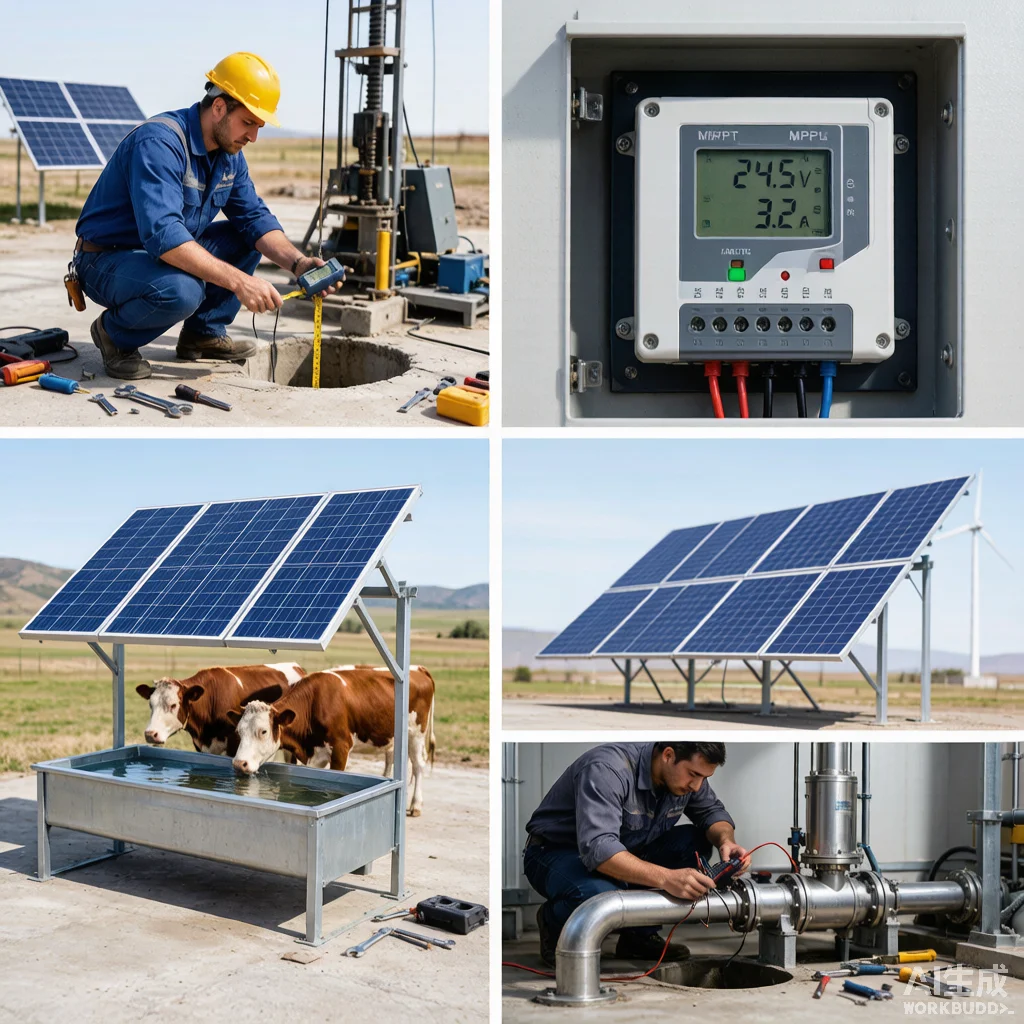
Electrical issues cause approximately 40% of service calls. Follow voltage from source to load: measure open-circuit voltage at panel terminals, then under load at controller input and output. Voltage drops exceeding 10% between test points indicate wiring faults—corroded terminals, undersized cables, or damaged insulation. A 500V insulation tester (megger) applied between motor leads and ground identifies developing winding faults: values above 20 MΩ indicate healthy insulation; 5-20 MΩ warrants monitoring; below 5 MΩ requires investigation and likely pump replacement before catastrophic failure.
Mechanical Failure Diagnosis
- Pump runs, no water — Air lock in pump column or blocked intake screen. Current draw will be below normal (no load). Purge air by cycling pump on/off; if persistent, pull pump and clean intake.
- Reduced flow rate — Compare against pump curve at measured TDH. Flow 15%+ below curve indicates impeller wear or partially clogged check valve. A leaking check valve causes water hammer on restart—audible diagnostic.
- Excessive noise/vibration — Bearing wear or shaft misalignment. Use mechanic’s stethoscope to localize noise source. Bearing failure typically presents as progressive deterioration over weeks rather than sudden onset.
- Intermittent operation — Usually a connection issue: loose terminal, water in underground cable splice, or controller overheating due to inadequate ventilation. See our maintenance guide for comprehensive mechanical inspection procedures.
Essential Field Technician Toolkit
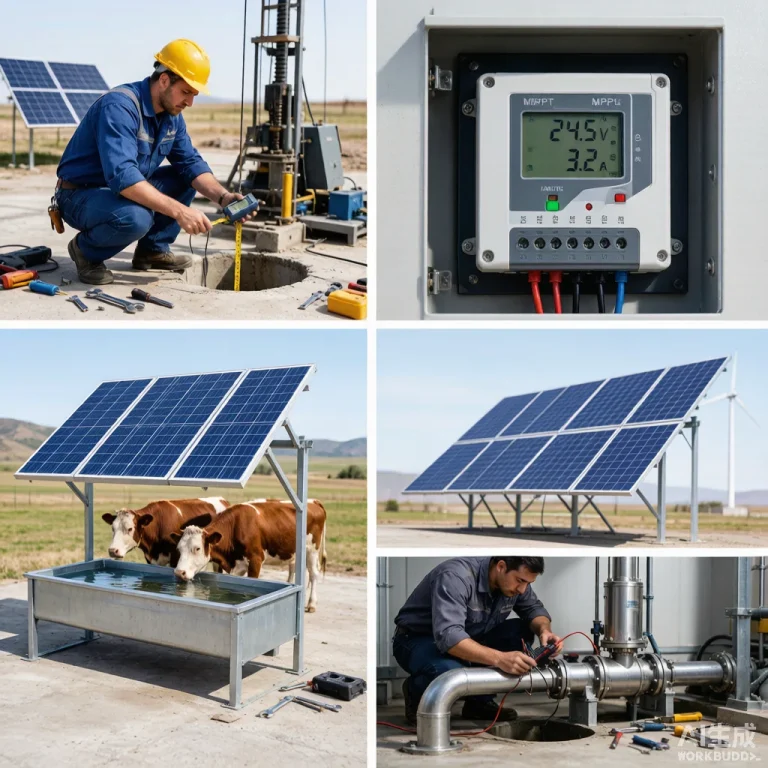
A properly equipped technician resolves issues in hours rather than days. Minimum kit: true-RMS digital multimeter with clamp current probe ($150-300), 500V insulation resistance tester ($200-400), water level meter ($100-200), portable ultrasonic flow meter or calibrated bucket-and-stopwatch kit, and the pump controller’s smartphone monitoring app. Total tool investment of $600-1,000 enables a technician to diagnose 95% of field issues without pulling the pump—a capability that pays for itself on the first avoided unnecessary pump extraction.
Frequently Asked Questions
Q: What’s the single most common solar pump failure?
A: Controller damage from lightning-induced voltage surges, accounting for ~25% of service calls. Installing SPDs on DC input and AC backup circuits reduces surge failures by over 80%. Total SPD cost is $80-150—less than 5% of a replacement controller.
Q: Can I diagnose a pump without pulling it?
A: Yes. Electrical testing at the surface—insulation resistance, winding resistance balance (within 2% between phases), and operating current—identifies 70% of developing faults without pulling the pump. Hydraulic issues (worn impeller, check valve failure) require pulling for confirmation but can be suspected from flow-vs-curve comparisons.
Q: How often should I replace the controller’s surge protection?
A: SPDs have a finite joule rating and degrade with each surge event. Replace SPD modules every 2-3 years in high-lightning areas, or whenever the visual indicator shows degradation (most SPDs have a green/red status window).
For B2B operators and service providers, contact KINBO for technician training, diagnostic tools recommendations, and spare parts programs.
Related Articles
- Solar Water Pump Maintenance Guide
- Solar Water Pump Working Principle
- Explore KINBO Solar Submersible Pumps