Solar Water Pumps for Dairy Farms: Drinking Water, Cleaning and Cooling System Design
Solar Water Pumps for Dairy Farms: Drinking Water, Cleaning and Cooling System Design
Introduction
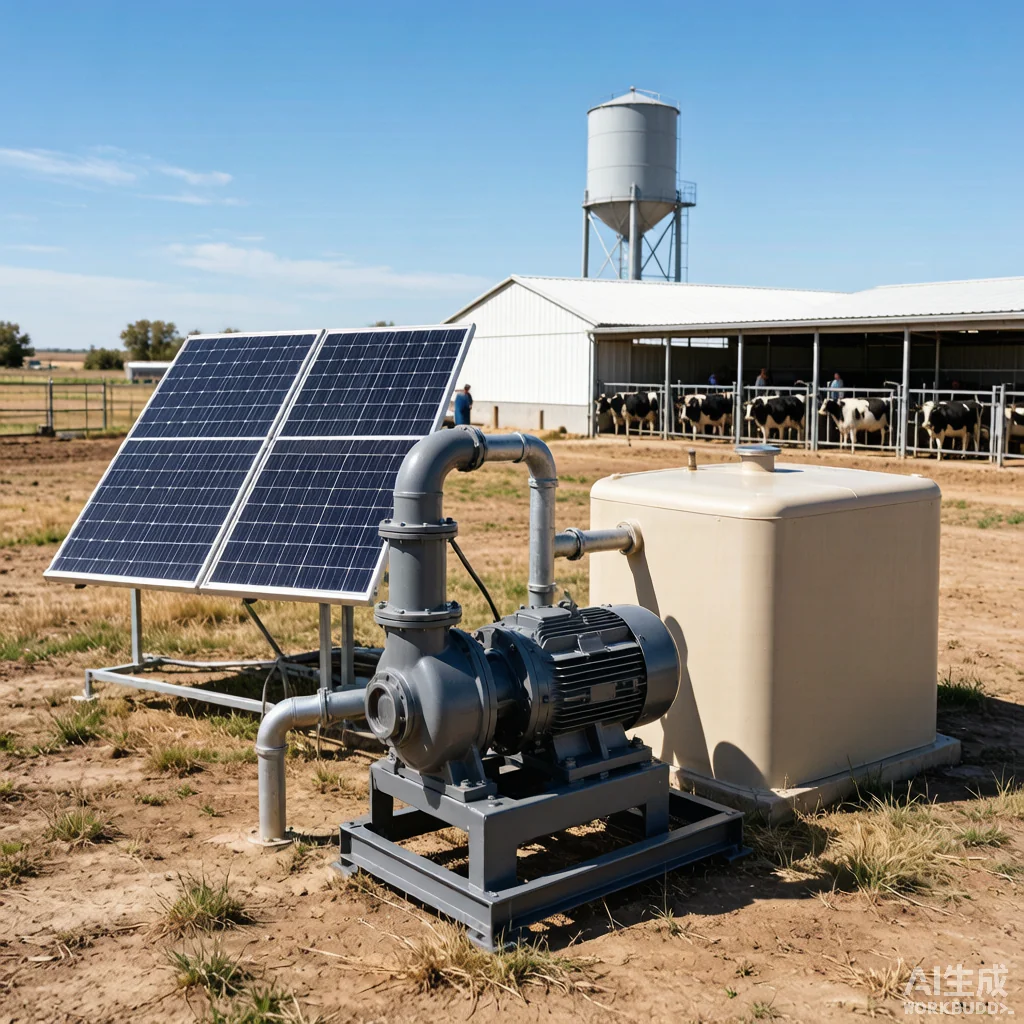
Dairy farming is one of the most water-intensive forms of livestock production. Beyond the obvious drinking requirement for the herd, a modern dairy needs water for milking parlor washdown, bulk-tank and plate-cooler make-up, and yard cleaning — often on a strict schedule that does not wait for sunshine. On off-grid or high-energy-cost farms, meeting that demand with diesel or grid pumping is expensive and unreliable.
KINBO designs solar pumping systems for livestock operations worldwide, and dairy presents a distinct set of demands: high, time-sensitive flow and pressure plus water-quality sensitivity. This guide covers how to design a solar dairy water system that keeps cows hydrated and the parlor clean. For the broader livestock approach, see our article on livestock solar pump system design.
Table of Contents
Understanding Dairy Water Demand
Dairy water use has three components, and each behaves differently through the day:
- Drinking water: The largest and most continuous load; lactating cows drink 80-120 L/day each, peaking in heat.
- Parlor washdown: Concentrated in the milking window, requiring steady pressure and moderate flow.
- Cooling make-up: Plate coolers and bulk tanks draw water during and after milking to rapidly drop milk temperature.
Because cleaning and cooling are time-bound, the system must either store water in a buffer tank or hold pressure through the wash cycle. Designing for the peak combined rate — not the average — prevents parlor downtime.
System Design Components
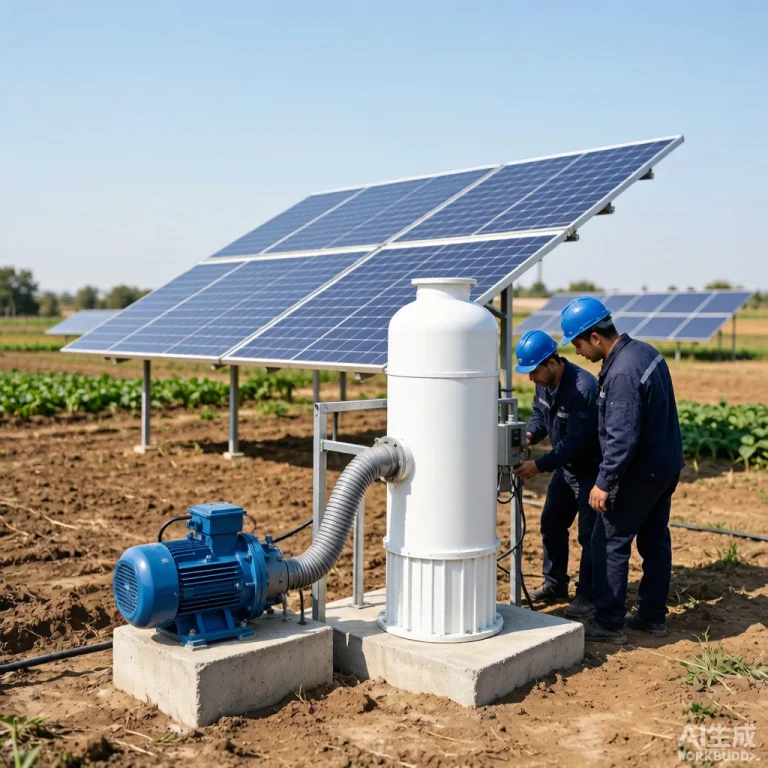
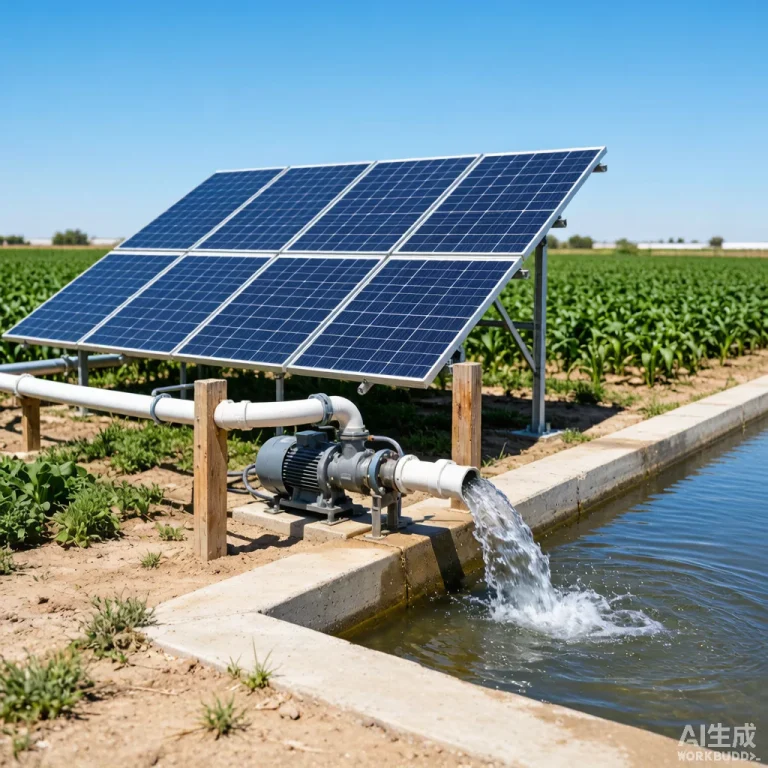
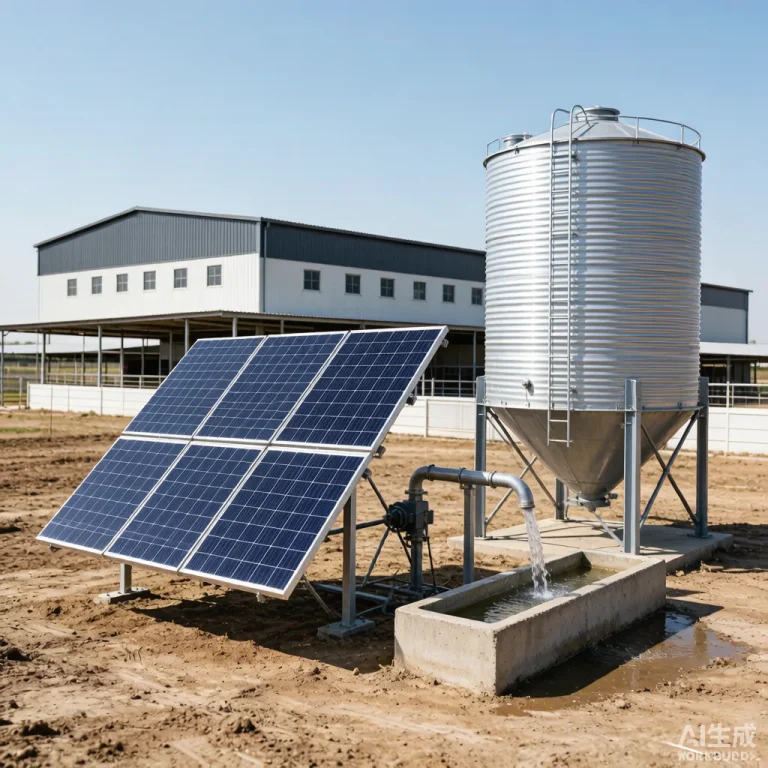
A robust solar dairy system combines several elements:
| Component | Role | Design Note |
|---|---|---|
| Solar pump set | Lifts and pressurizes water | AC/DC with VFD for stable pressure |
| Buffer tank | Covers pre-dawn wash | Size for one full milking cycle |
| Pressure tank | Smooths parlor demand | Avoids pump short-cycling |
| Filtration | Protects udder health | Screen + optional UV for potable use |
KINBO sizes the array so the buffer tank is full before the first milking and the pump holds parlor pressure through the wash, even on a partly cloudy morning.
Sizing Example: 100-Cow Herd
Consider a 100-cow dairy. Drinking demand alone is about 10,000 L/day. Adding washdown and cooling brings total demand to roughly 18,000 L/day. If the well is 40 m deep with 20 m of elevation to the tank, the hydraulic power needed is modest but the daily volume is high, so the array and pump must sustain roughly 1,500 L/h across the sunny window. A 1.5-2.2 kW pump with a 3-4 kWp array and a 20,000 L buffer tank covers the duty with margin. Figures are illustrative; final sizing depends on local solar irradiance, well depth and water temperature.
ROI and Reliability
For off-grid or high-tariff dairies, solar pumping typically pays back in 2-4 years by eliminating diesel and grid energy for water. The less visible benefit is reliability: a parlor that cannot wash is a parlor that cannot milk, so uninterrupted water directly protects milk quality and revenue. A solar system with a buffer tank is also resilient to grid outages during storms — exactly when cooling matters most.
Frequently Asked Questions
How much water does a dairy cow need per day?
A lactating dairy cow drinks roughly 80-120 liters per day in moderate conditions, rising above 150 liters in hot weather or at peak lactation. A 100-cow herd therefore needs 8,000-15,000 liters daily just for drinking, before accounting for parlor washdown, plate-cooler make-up and cleaning water, which can double total demand.
Can solar pumps handle dairy cleaning water pressure?
Yes. Milking parlor cleaning and washdown typically need 2.5-4 bar at moderate flow. An AC/DC solar pump with a pressure tank or variable-frequency drive delivers stable pressure through the day, while a buffer tank covers early-morning washing before peak sun. KINBO systems are sized to hold pressure during the wash cycle.
What is the payback on a solar dairy water system?
For off-grid or high-tariff dairies, replacing diesel or grid pumping with solar typically pays back in 2-4 years through eliminated fuel and electricity costs, after which water is effectively free. Additional value comes from reliable cooling and cleaning that protect milk quality and avoid spoilage losses.
Designing a Solar Dairy Water System?
The KINBO team sizes pumps, tanks and arrays for reliable dairy drinking, cleaning and cooling water. Get expert guidance and full after-sales support.
August 21, 2026 | Author: KINBO Editorial Team
Related Articles