Solar Pump Battery Backup Sizing: Run Your Pump at Night and Through Cloudy Periods
Solar Pump Battery Backup Sizing: Run Your Pump at Night and Through Cloudy Periods
Introduction
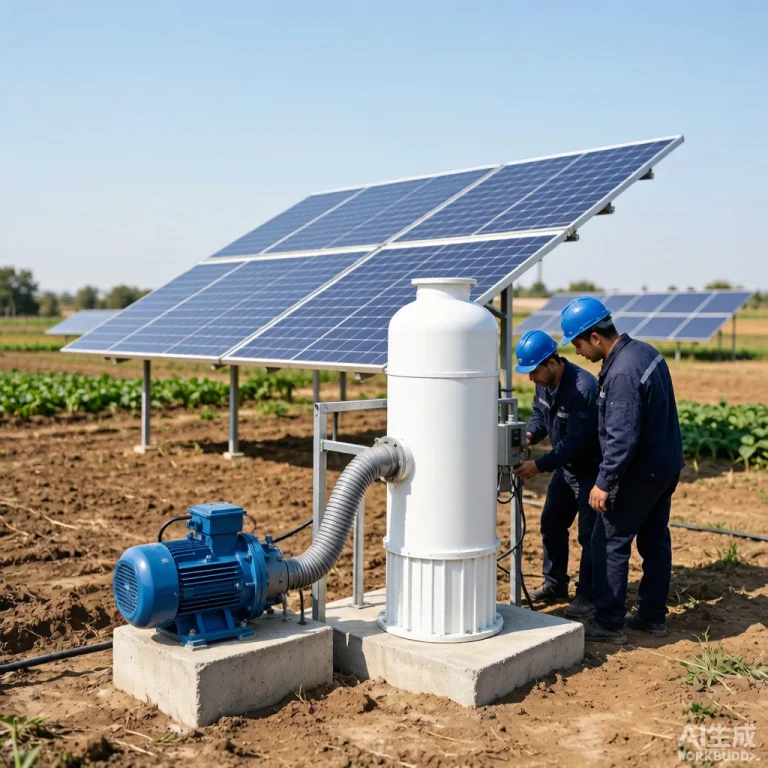
Most solar water pumps are designed to run directly from the sun, pumping water into a tank that stores the energy as elevated water instead of stored electricity. This elegant approach avoids batteries entirely. But some applications demand pumping when the sun is not shining — a dairy that needs washing water before dawn, a pressure-sensitive irrigation schedule, or a site with long cloudy seasons where a tank alone cannot bridge the gap. That is where battery backup comes in.
KINBO engineers specify both direct-drive and battery-backed solar pumping systems, and getting the battery size right is critical: too small and the pump stops when needed most; too large and you waste capital on cells that rarely discharge. This guide walks through the sizing math and the trade-offs. For systems with fluctuating demand, see our article on designing for variable water demand.
Table of Contents
When You Actually Need Batteries
Before sizing a battery, confirm you need one at all. Batteries add cost, maintenance and failure points. Consider them only when:
- You must pump on a fixed schedule that includes night or heavy-cloud hours.
- A larger storage tank is physically or economically impossible.
- Water pressure must be maintained continuously (e.g., drip lines on timers).
- The site faces extended low-sun periods that a tank cannot bridge.
If none of these apply, a correctly sized tank with a direct-drive pump is almost always cheaper and more reliable.
The Sizing Calculation
Battery capacity follows a straightforward energy balance. Estimate the pump’s DC input power in watts (read from the nameplate or controller), multiply by the required autonomous run hours, and convert to amp-hours at your bank voltage.
| Step | Formula | Example (750 W pump, 4 h) |
|---|---|---|
| Daily energy | Power × hours | 750 W × 4 h = 3.0 kWh |
| At 48 V bank | Wh ÷ 48 V | 3000 ÷ 48 = 62.5 Ah |
| Depth of discharge | ÷ 0.8 (LiFePO4) | 62.5 ÷ 0.8 = 78 Ah |
| Loss margin | × 1.25 | ≈ 98 Ah → choose 100 Ah |
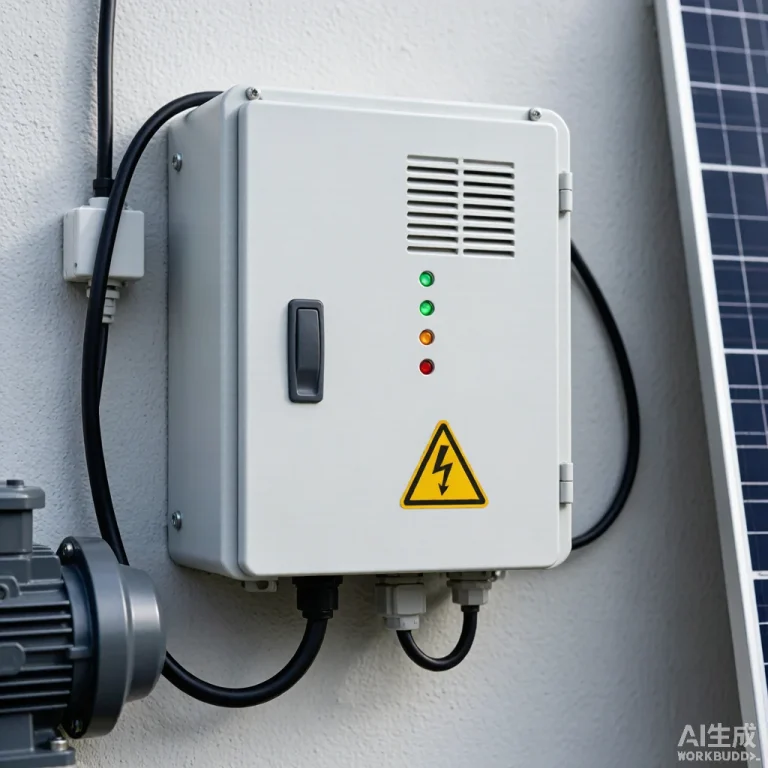
Add extra capacity for each day of autonomy you want beyond the first, and confirm the solar array can fully recharge the bank in a normal sunny day. KINBO controllers include charge-stage management to protect the bank and maximize cycle life.
Battery Chemistry Choices
Two chemistries dominate solar pump backup. Flooded or sealed lead-acid is cheap upfront but heavy, shorter-lived and maintenance-intensive. LiFePO4 (lithium iron phosphate) costs more initially yet delivers deeper discharge, faster solar recharge, a 2000-5000 cycle life and zero maintenance — decisively better for remote, hard-to-service sites. For most agricultural and community systems, LiFePO4 wins on total cost of ownership.
Tank vs Battery Trade-offs
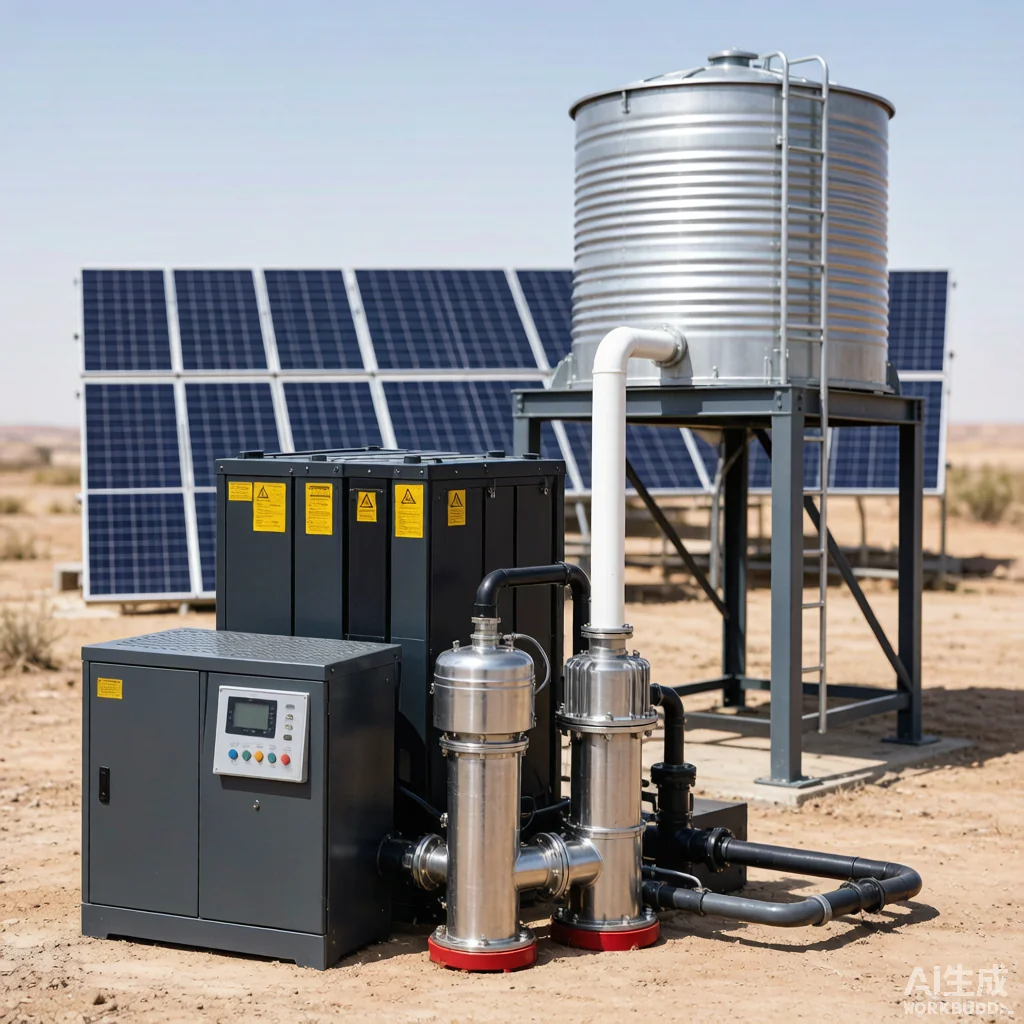
The most important design decision is often tank versus battery. A 10,000-liter tank stores the equivalent of many kilowatt-hours of pumping energy for a fraction of a battery’s cost and with no degradation. Default to a larger tank; add batteries only for the gap it cannot fill. Where space, elevation or budget forbid a big tank, batteries become the pragmatic choice.
Frequently Asked Questions
Do solar water pumps need batteries to work?
No. Most solar pumps run directly from the array during sunlight and store water in a tank rather than energy in a battery. Batteries are only needed when you must pump at night, during long cloudy periods, or to guarantee a fixed daily volume regardless of weather. For many systems a larger tank is cheaper than a battery bank.
How do I calculate the battery capacity I need?
Multiply the pump’s DC input power (watts) by the hours of autonomous operation you require, then divide by the battery bank voltage and apply a depth-of-discharge factor (typically 0.5 for lead-acid, 0.8 for LiFePO4). Add 20-30% for inverter and wiring losses and for days of autonomy you want to cover.
Is LiFePO4 or lead-acid better for solar pump backup?
LiFePO4 is better for most solar pump backups: it accepts higher charge currents from limited solar input, tolerates deeper discharge, lasts far longer (2000-5000 cycles) and needs no maintenance. Lead-acid is cheaper upfront but shorter-lived and maintenance-heavy. For remote sites where servicing is difficult, LiFePO4 usually wins on lifecycle cost.
Need a Battery-Backed Solar Pump Design?
The KINBO engineering team sizes banks, charge control and tanks together for reliable off-grid water. Get expert guidance and full after-sales support.
August 21, 2026 | Author: KINBO Editorial Team
Related Articles